Staging a School production of The Curious Incident of the Dog in the Night-Time presented an exciting challenge for all involved. The play’s fast-paced, episodic structure requires an ensemble to create Christopher Boone’s world through movement, imagination and precise physical storytelling. Rapid shifts between locations, memories and internal thoughts demand clarity, control and a strong sense of collaboration.
As a text studied at A-Level, Curious Incident offered Upper Sixth Drama pupils a valuable opportunity to move beyond academic analysis and into lived theatrical practice by joining the directing team. Pupils contributed creative ideas, shaped movement sequences and offered feedback as the production developed. This allowed them to explore the text in greater depth, while also gaining first-hand experience of the director’s role in a practical, applied context alongside a committed and enthusiastic cast.
The collaborative nature of rehearsals proved highly effective. Pupils brought fresh perspectives, thoughtful observations and a detailed understanding of both the text and its physical style, often identifying creative possibilities that helped refine and clarify scenes. Acting as senior peers within the rehearsal room, they supported the cast while developing confidence in articulating ideas, overcoming challenges and leading creative discussion.
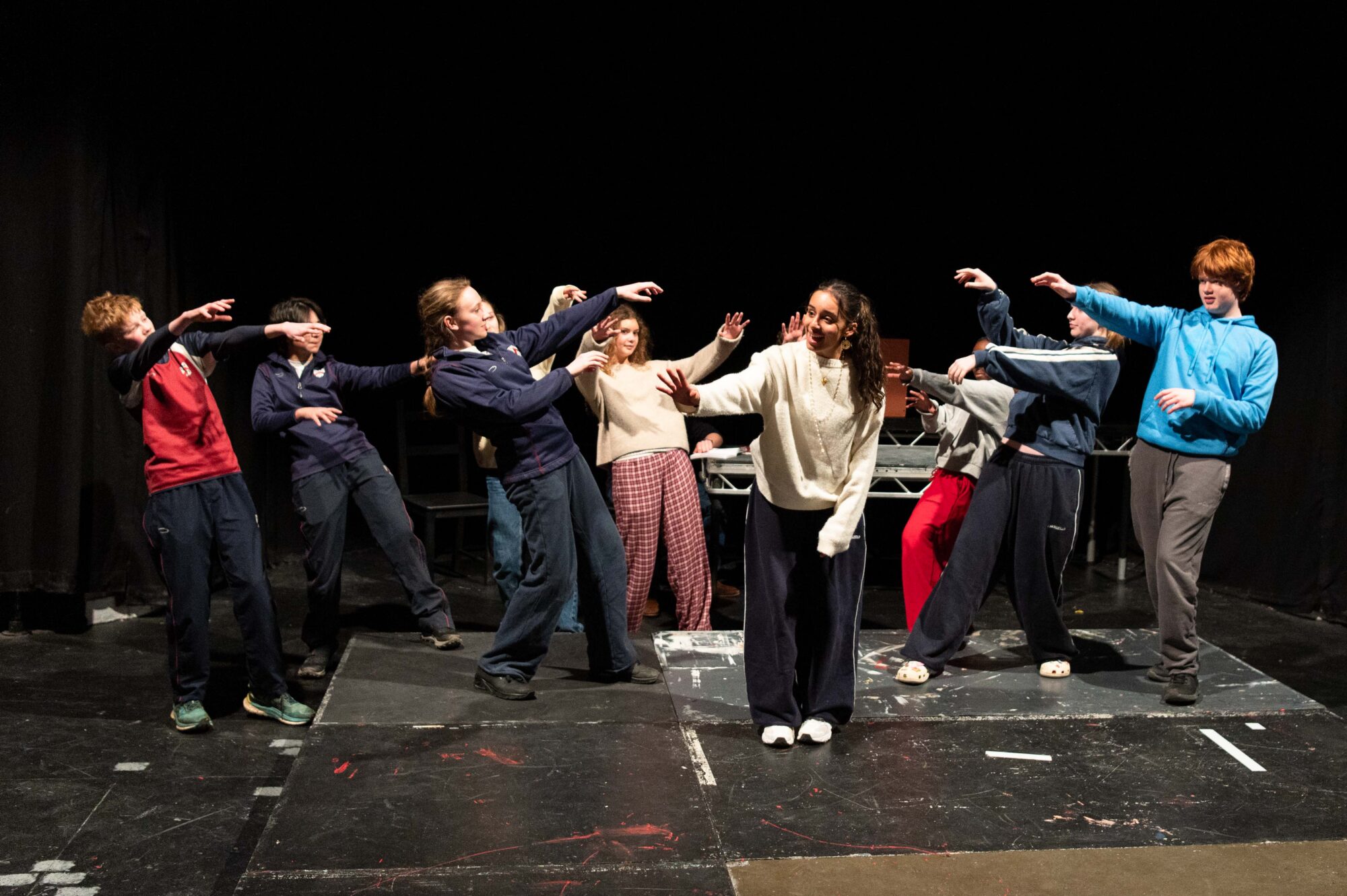
Much of the rehearsal time focused on building movement sequences, beginning with simple ideas and gradually developing them into complex, visually powerful moments. This incremental approach enabled performers to understand both the physical demands of the work and its narrative purpose.
Rehearsals were characterised by playfulness, experimentation and a strong sense of collective problem-solving. The process demonstrated how movement can communicate emotional experience and internal thought without reliance on dialogue, an idea central to the play’s storytelling.
The cast responded positively to this collaborative dynamic. Working alongside senior peers created a supportive environment and strengthened the ensemble’s sense of shared ownership. The presence of pupil directors encouraged openness, experimentation and mutual respect throughout the rehearsal process.
“Approaching the directing side of theatre was new to me, but working with an ensemble that were keen to learn and perform made the whole experience much more enjoyable. After studying Curious Incident at A level, I felt that I had an understanding of the play and how I wanted the style to look, but it was amazing to see such a small idea transform into a fully functional scene. It was definitely a challenge to try and explain my thoughts for the extract out loud, but thankfully the actors trusted me and my process (even when I told them to become a train and chug around the room).”
Emy, U6
For many pupils, this production marked their first experience of directing. Learning to explain ideas clearly, gain the trust of the ensemble and watch abstract concepts develop into fully realised scenes offered new insight into the demands of directing. The experience was both enjoyable and rewarding, strengthening pupils’ confidence and deepening their understanding of collaborative theatre-making. Involving pupils in the directing process not only enriched the creative work, but strengthened the ensemble and enabled pupils to learn through meaningful, practical experience.