This August, with the support of the Savvi Travel Adventure Award, three fellow Oundelians and I embarked on an unforgettable historical tour of Paris. After a written application and gruelling round of interviews from some of the School’s finest teachers, we were very excited to begin our cultural journey through the French capital. Our goal was simple: to experience as much of the city’s history and culture as possible in just four days. For a city founded over two millennia ago, however, this was no easy feat.
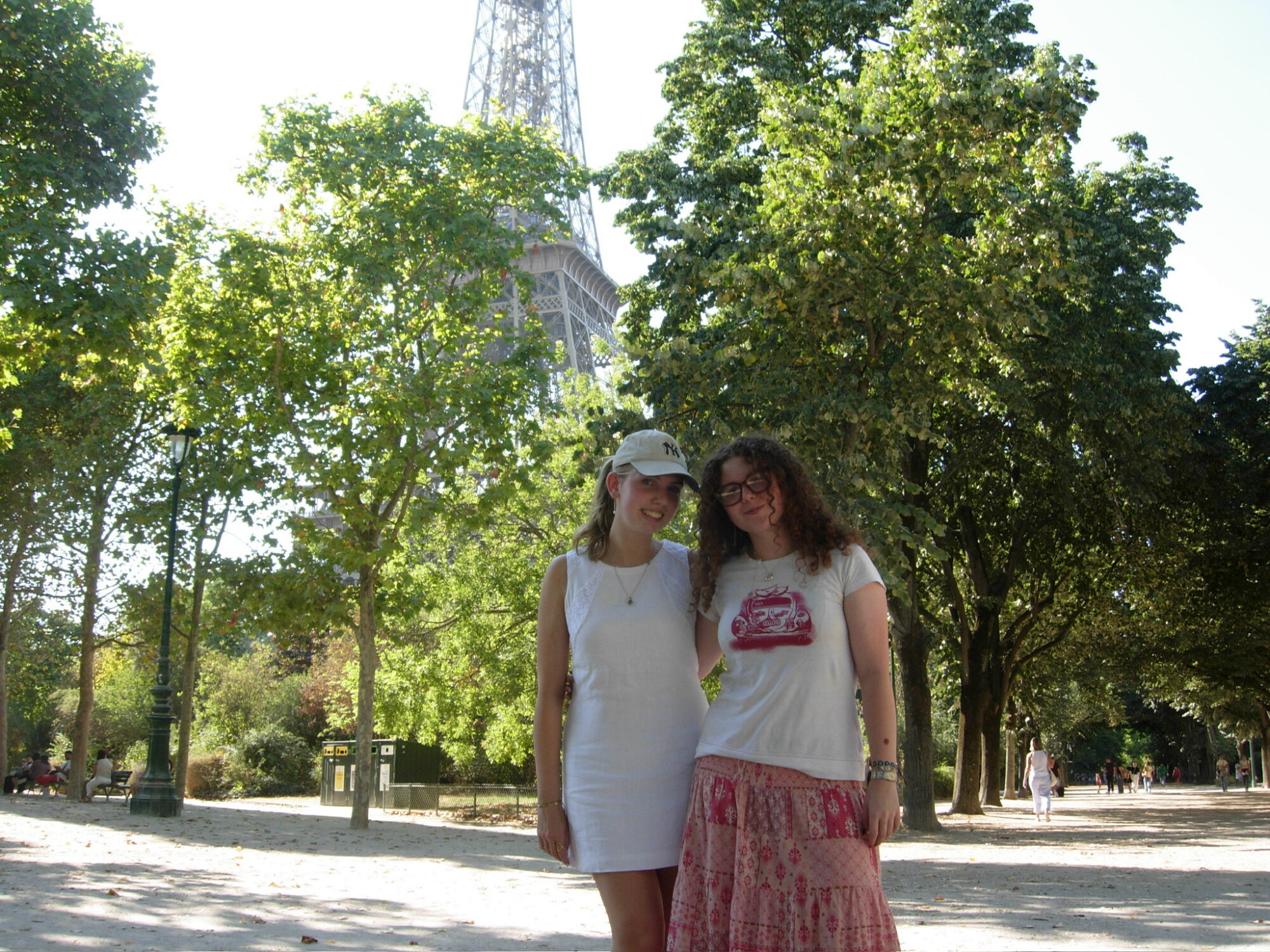
Determined to succeed, we began as any good Parisian tourist should: at the Eiffel Tower. This was quickly followed by a climb up the Arc de Triomphe, which provided unforgettable views of the city, even if its 284 steps, combined with 36-degree heat, left us grieving the Eurostar’s air conditioning!
With the obligatory landmarks out of the way, we turned our attention to some of the city’s other historical sites. The Musée de l’Armée was a particular highlight. Within its grounds stands the Dome of Les Invalides, home to the tomb of Napoleon Bonaparte. Constructed from red quartzite and positioned so that visitors must either bow or lift their heads, out of respect to view it, the tomb provided a striking reminder of Napoleon’s enduring legacy.
On our third day, we visited the Musée de l’Orangerie, home to Claude Monet’s famous Water Lilies. Despite being most excited by the historical sites, this unexpectedly became my favourite experience of the trip. Several hours of constant exploration, sitting quietly in the centre of the gallery and admiring Monet’s work was incredibly grounding. It offered a rare opportunity to stop, appreciate, and reflect.
A close second, however, was the Château de Vincennes, which we visited on our final day. Located on the outskirts of Paris, the château was home to Henry V after he contracted dysentery during the siege of Meaux. Standing in the same room in which the hero of Agincourt died was a genuinely chilling experience and provided a fitting conclusion to our historical exploration of the city.
One moment that has stayed with me from the trip occurred during the rare solar eclipse. We joined the crowds in Montmartre to watch it but had been unable to source eclipse glasses. Witnessing our predicament, a kind French couple offered us theirs. That small act of generosity challenged my assumption that all strangers should be approached with outright suspicion. I had arrived expecting scams and pickpockets; instead, I left reminded of the importance of looking for the good in others and extending the same kindness to strangers that had been shown to us.
That is not to say that the trip was without challenges. The most noticeable was certainly the heat, with temperatures reaching the mid-thirties. Fortunately, medieval monuments became our safe havens, with their thick stone walls providing welcome relief from the sun. We had also prepared ourselves for the horror stories surrounding the Paris Metro, but our experience was remarkably positive. It proved invaluable for travelling into central Paris from our hostel in Montmartre each morning.
The Adventure Award offers something no ordinary school trip can: the freedom to take control of your own learning. It is the legacy of Old Oundelian Patrick Dudgeon (St. A 1934-38) who was killed by the Nazis in 1943 in Italy. His family funded a scholarship in his memory and other families and organisations connected to the School community have helped keep this award alive, with four grants now available for Lower Sixth pupils. It serves as a wonderful reminder of the strong relationship between current and Old Oundelians and I am incredibly grateful to the donors who made this experience possible.